
 934814391

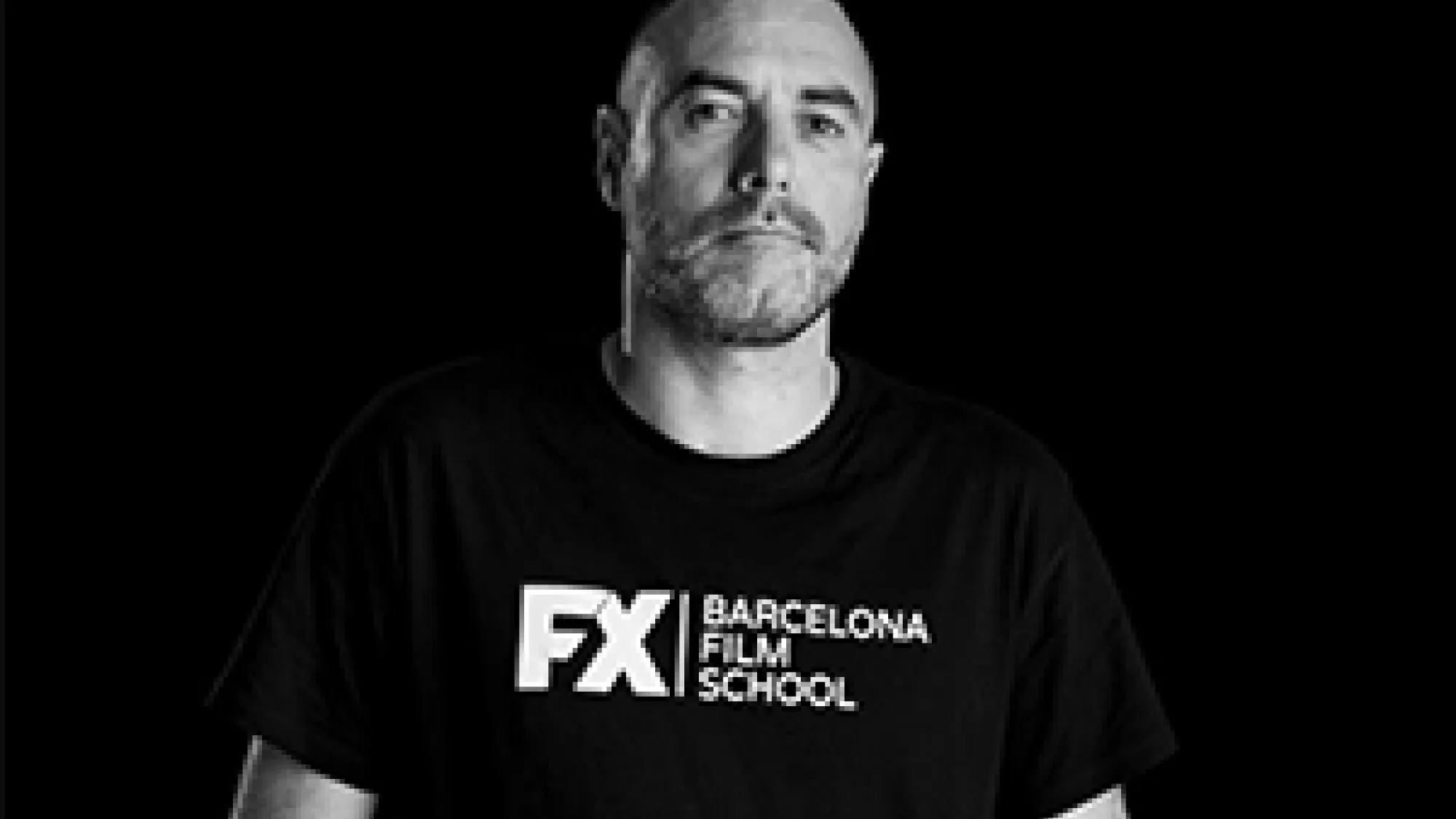
Miguel Arjona
Miguel Arjona is a scriptwriter, filmmaker, film teacher, and collaborator at FX BARCELONA FILM SCHOOL. After studying a university career unrelated to the world of art, nursing, he decided to delve into the seventh art and study film. Perhaps that's why he's a great fan of David Cronenberg's cinema, the director who masterfully brought together the mysteries of the human body and terror on the same screen. After writing and directing several shorts in 2005, Miguel had the opportunity to be the director of Estudiodecine, a position he has held for ten years. Since then, he has combined his work in the field of education with the production of several feature films (Párking, La Manada), scriptwriting, and directing short films and music videos.
His knowledge of the film world is as broad as his cinematic weaknesses. For example, he is a fan of both movies starring Sylvester Stallone and the surrealist feats of Buñuel. And if you visit the Phenomena cinema, you are sure to run into him, as Miguel has found his second home in Nacho Cerdà's theater. Below, he reveals some of his passions and analyzes a recent cult film, as hypnotic as it is surprising: “Mandarinas" (Zaza Urushadze, 2013), the film he is presenting today at Sala Montjuïc.
When and why did you become interested in film?
Since I was very young, my aunt used to take me to marathons of movies at the Capri, the cinema in my town, in Prat de Llobregat. I remember that on one occasion I was given a ticket to see the group Parchís live, and I refused to go. I wanted to see them in the movies, on the big screen. They tried to convince me that it was better to see them in concert, and although I finally agreed, I knew it wasn't the same.
What has been your professional career path in the audiovisual world?
After finishing my studies, I wrote several short film scripts and shot some with friends and classmates, while still working on things unrelated to cinema. But soon after, the opportunity to direct Estudiodecine came, and from then on, all my work has been linked in one way or another to the school, especially as a producer. As a director, I have made several shorts, commercials, music videos, and also worked as an assistant director.
What works would you highlight from your professional career?
I am very happy with the feature films I have produced through the school, which had students as protagonists. They were made under difficult conditions and always with an educational perspective, but they show that you can make films in different ways as long as you tell a good story. I particularly remember Parking, filmed in four weeks with the collaboration of filmmaker Roger Gual, which was very well received at festivals. I also remember Russian Red, which didn't have much impact at festivals, but I believe it is a very consistent and mature work. Right now, I am mainly focusing on writing and will continue in education.
Who are your "yodas" in the world of film directing?
There are many directors I like and admire, but if I have to choose some names, I would go with Alfred Hitchcock, David Cronenberg, Michelangelo Antonioni, Sam Peckinpah, and Luis Buñuel.
Tell us briefly about your experience directing your short film "El Vestido," recently shown in the Cinefórum of El Prat de Llobregat.
It was a fantastic experience in which I learned a lot. I was lucky to work with people who are dedicated professionals and at the same time are friends and collaborators in my school, so I learned a lot from them. It was a shoot that was organized very quickly and lasted only two days. Everything was in constant motion: scenes were removed from the script, changes were made to the shooting plan... I learned that you have to be attentive and able to see things that don't work and find solutions. The script is important but not always final.
And after “El Vestido” comes...
Right now, I am writing several feature film scripts, a somewhat peculiar thriller for Toni Comas, a director based in New York. I also have an adaptation of a book in the works and, finally, a more personal script. These last two projects I am working on with screenwriter Enric Rufas. Additionally, I plan to shoot another short film in October.
What would you highlight in general terms about Mandarinas?
Mandarinas is a very interesting film, with the rhythm and tough yet intimate atmosphere typical of Eastern European movies. I like how it manages to keep the audience's interest, even though everything happens practically in a single space. For me, the best part is its direction of the actors.
Can we talk about "Eastern European cinema"? How would you define it?
The films coming from Eastern European countries are highly influenced by the politico-cultural situation they are experiencing. Their perspective, themes, and even the staging of their countries breathe the changes and transformations they have undergone in the form of wars, crises, etc...
Tell us, briefly, about your experience in these ten years as director of Estudiodecine.
It has been a fantastic experience. Teaching is something I love, and being able to approach it the way I like has been rewarding. I have had the opportunity to work with people I admired and from whom I have learned a lot. And, of course, the contact with the students: it is nice to see how they grow and especially to see that after years they continue working and with projects.
What do you think the school can contribute to the film and television industry?
The goal is to provide the industry with highly qualified professionals capable of working in specific positions on a production as professionals who can develop projects and carry them out themselves, what we would call a filmmaker. When projects don't come to you, you have to create them and generate interest from production companies. It is also necessary to make students aware that their job opportunities are everywhere in the world.
```