

 934814391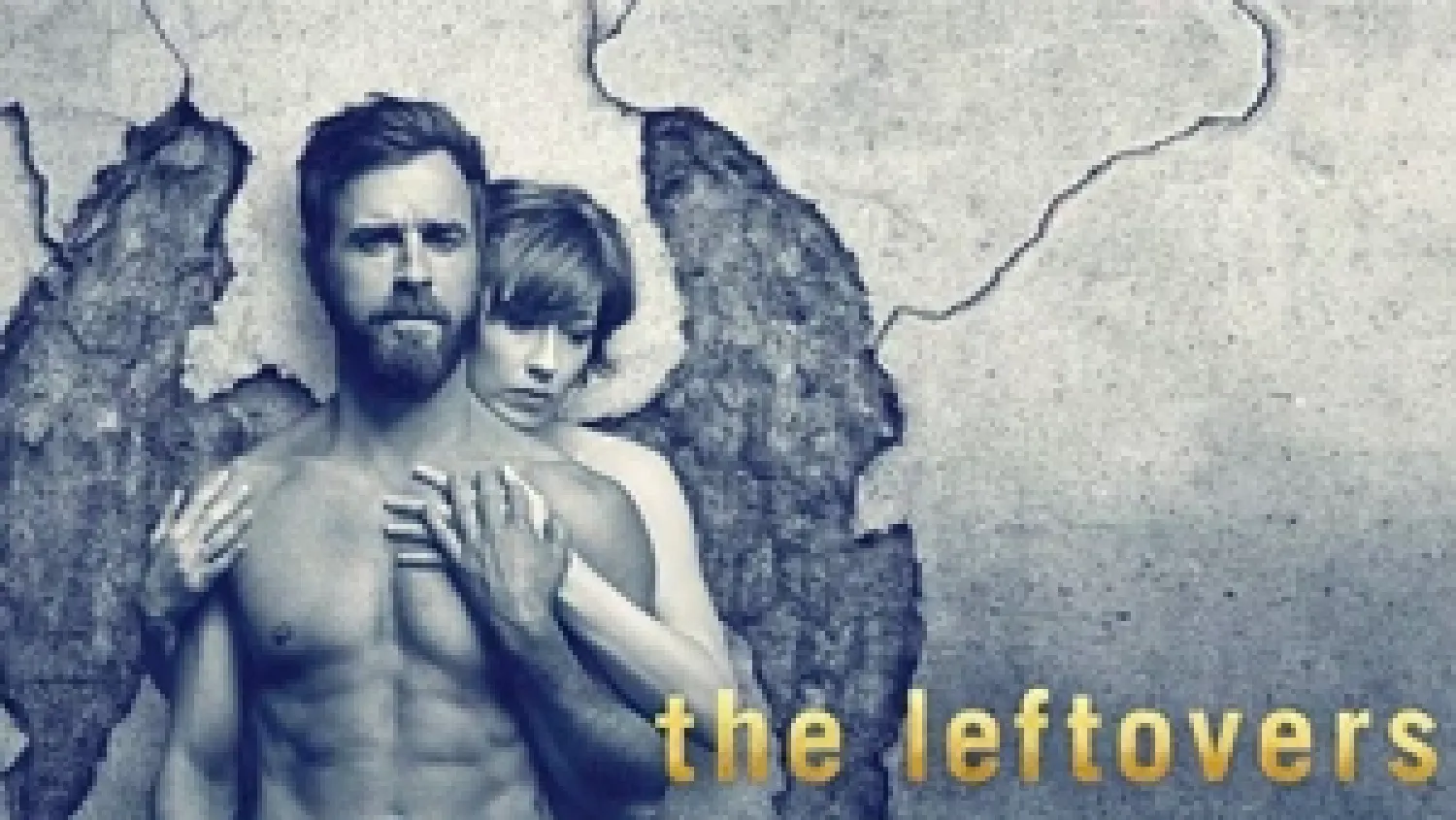
What? This is the question that Nick Garvey, the character played by Justin Theroux, constantly and almost automatically asks whenever any other character tells him something. The disbelief, surprise, and confusion shown by the Mapleton sheriff (New York) in the face of any situation he encounters is what conveys the feeling of disorientation and unease that the series "The Leftovers" transmits to its viewers. Nick needs to have any phrase repeated to him, gaining time to come up with a response, to understand what is happening, to avoid reality.
What is happening in Mapleton?
What happens in "The Leftovers"? That is the question that fans of this HBO series have asked themselves during its three seasons. An eternal stream of questions planted in countless brilliant moments, unexpected plot twists, and a series of characters that have already become legendary among series fans. There is clearly a starting point: the so-called "Departure Day" definitively changes life on the planet when, suddenly, at  a precise moment, 2% of humanity disappears. There is no apparent reason, no sense, no place where they have gone. Or at least we don't know yet.
That question that our hero keeps asking time and time again translates into one of the series' themes: the incomprehension of why things happen. It's as if every time we ask "what?", we have the opportunity to gain time in the face of the fear of accepting the facts being explained to us. The protagonists of "The Leftovers" wander trying to forget their missing loved ones, seeking new relationship formulas that allow them to regain some semblance of the happiness they enjoyed before. Our tortured heroes move in the limbo between denial and acceptance. Between the guilt of acceptance and the faith of denial.
Family faith, viewer faith
Our heroes, not only Nick, cling to the few values they have left, values personified in concepts such as family and group. Atypical families forced by situations that want to forget what happened and move forward to build a new life, and groups that, in a sectarian manner, dressed in white, in silence, and with an excess of cigarettes, fight to prevent the disappeared from being forgotten. Different ways to overcome loss.
Nora and Nick form a completely dysfunctional family, full of traumas and stained by pain, constantly shifting, unfolding into parallel worlds, leading the viewer to narrative territories that suspend the viewer's credibility although, we won't deny it, fill them with emotion and satisfaction. Because we enjoy immersing ourselves in absolute chaos, in a tide of clues and duplicate characters. It's something that bewilders us, but we know that there will be an answer. It is a landscape through which the creators of "The Leftovers" have led their viewers in series like "Lost", and that's when the viewer's faith pushes them to continue enjoying.
Radical structure
 One of the most seductive aspects of the series is its narrative structure. A plot drift that seems to wander without an apparent connection and transports us through different unrelated places and above all towards disconnected temporal spaces: flashbacks, flashforwards, memories, and dreams. A series of moments that function more like a puzzle and don't necessarily have to take on a specific form. Just like in other transgressive past and current proposals like the former and current "Twin Peaks" (David Lynch), time and space are constructed in the minds of the characters, in their emotional sway, in a journey that goes from life to death, from rationality to dream. A clear example of these magical moments can be found in the episodes where Nick "dies," to wander through parallel worlds filled with film references and split plot characters, showing a kind of dreamt death. Episodes that, like in Twin Peaks, explain more about the plot than any other more classic narratively-oriented episode. Dreams explain life better than memories.
Too classic of an ending?
The final episode of "The Leftovers" has been called a masterpiece and as the most surprising thing seen in recent years. It is true that, after dozens of hours walking through dark areas, traveling through time and space hand in hand with non-linear plots, immersing oneself in dreams, and walking with bated breath, an ending where everything stops and is defined by a conversation is as staggering as it is soothing. As always, the worst thing about series is that they eventually end.