
 934814391
- The documentaries nominated for the Oscar for Best Documentary this year were full of stories that in one way or another revolved around racial issues in the United States (USA). Both the documentary "13 th" and "I Am Not Your Negro" focus on racism or different conflicts that the black community has faced in the past century in the USA. A claim about the struggle for civil rights at a time when the arrival of Donald Trump to government is shaking the "supposed American freedoms," and in general, ultranationalism and the far right are gaining ground in parts of Europe and the world.
- However, the Oscar-winning documentary is neither of them; the winner is "O.J: Made in America," a film produced by ESPN Films and directed by Ezra Edelman. Like many of the documentaries produced by the sports channel, it is much more than a portrait of a key figure in American sports history. It is about a vital figure in modern sports history, show business, the new sensationalist television, an icon of pop culture, and... a reference in the fight for civil rights?
- O.J. Simpson has been one of the most important American football players in history and also one of the most media-driven figures in the press and television. A black sports star whose success flourished at a crucial moment in recent US history: the Vietnam War and one of the peak moments in the fight for civil rights for African Americans. The documentary tells, in a structure similar to that of gangster movies, of the rise and subsequent fall of a mass idol. A black athlete who succeeded and decided to live like any wealthy and powerful white man, completely distancing himself from the fight for the rights of his race, claiming that he wanted to be recognized for who he was: O.J. Simpson, and not as a man of color with a social responsibility due to his status as a mass idol.
- The documentary progresses through the recent history of inequality and police violence in Los Angeles against black people until it reaches one of the decisive moments of the film: Simpson's murder accusation for the death of his ex-wife and one of her lovers in 1994. The circumstances of police violence in cases like the beating by police officers of Rodney King in California turn his case into an act of racial struggle and social justice. We witness, in detail, the trial, as did the protagonists themselves, more than twenty years later. But we also witness a media phenomenon that somehow drove a new way of understanding television and the media. Just as in Spain with the terrible "Triple Crime of Alcàsser," which led to the well-known "trash TV," the O.J. Simpson case became the most followed and exploited event in the last two decades, crucial to understanding other sensational phenomena like the Kardashian family, reality shows, or Simpson's subsequent journey.
- ESPN Films once again masterfully uses the sports universe to portray the deepest ills of society, such as drugs, power, the mafia, social injustice, excessive ambition, ignorance, HIV... maladies that it exposes in documentaries like "Chris Herren: The First Step" (2011), "Broke" (2012), "Benji: The True Story of a Dream Cut Short" (2012), or "Playing for the Mob" (2014).
- The story of O.J. Simpson unmasks a man, a society, and a country with two faces.
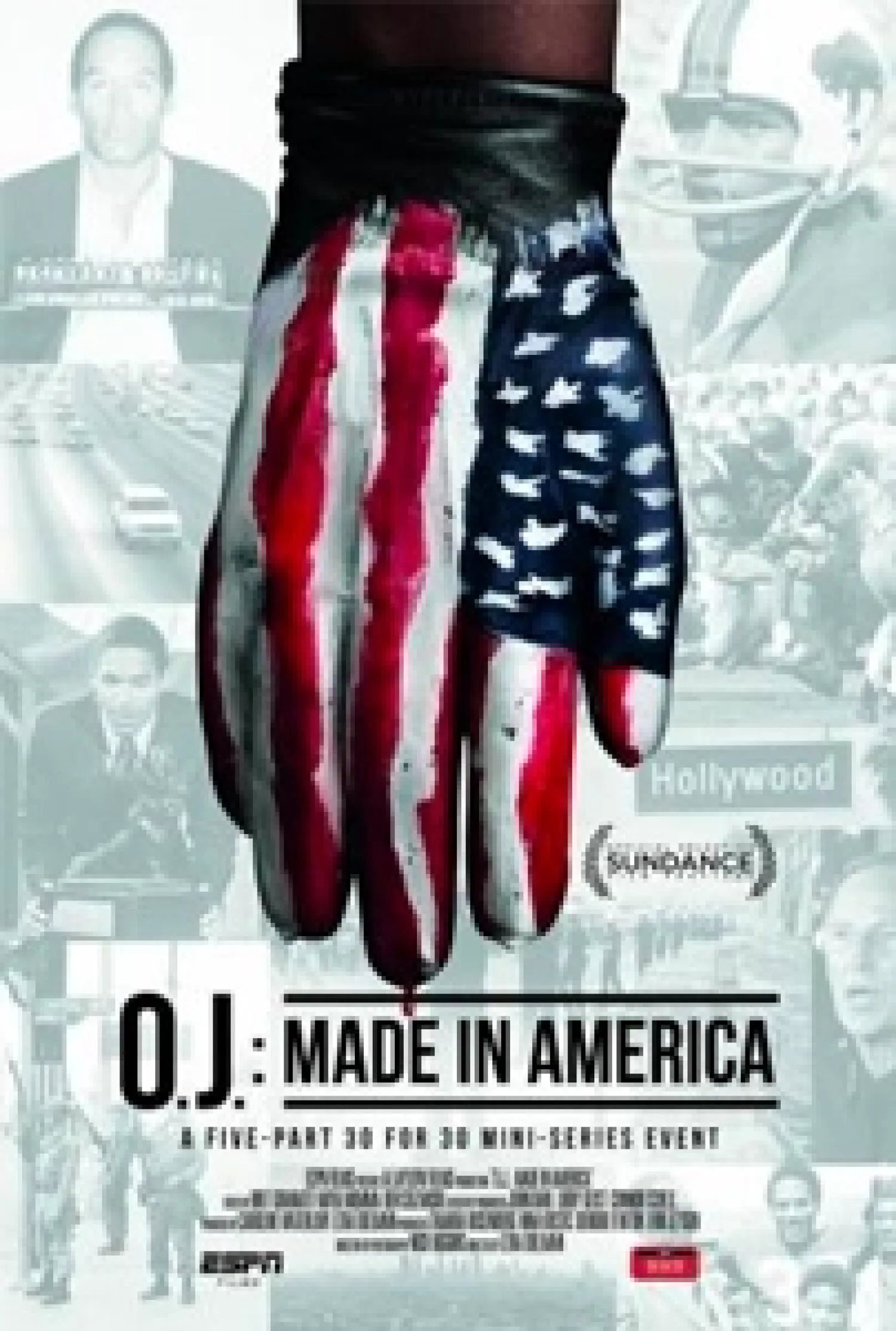
O. J: Made in America
The films nominated for the Oscar for Best Documentary this year were full of stories that in one way or another revolved around racial issues in the United States (USA). Both the documentary "13th" and "I Am Not Your Negro" focus on racism or different conflicts that the black community has faced over the past century in the USA. They are a claim on the struggle for civil rights at a time when the arrival of Donald Trump to government lashes out at the "supposed freedoms" of the United States, while ultranationalism and the far-right are gaining ground in parts of Europe and the world.
But the Oscar-winning documentary is none of them, the winner is "O.J.: Made in America," a film produced by ESPN Films and directed by Ezra Edelman. Like many of the documentaries filmed by the sports-specialized channel, it is much more than a portrait of a key figure in the history of American sports. It is about a vital figure in the modern history of sports, entertainment, the new sensationalist television, an icon of pop culture, and... a reference in the fight for civil rights?
Image