
 934814391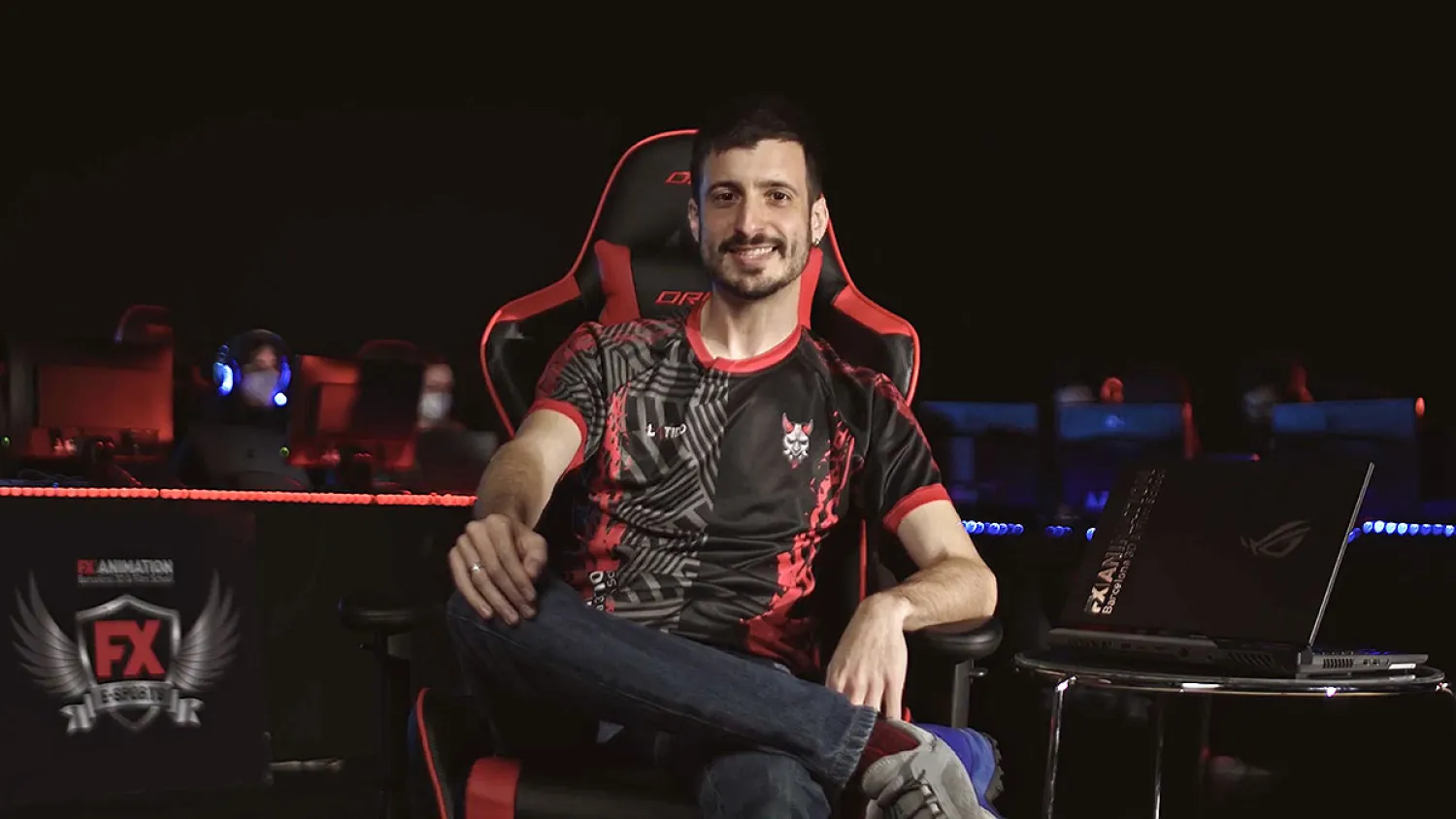
Fx Barcelona Film School eSports Team
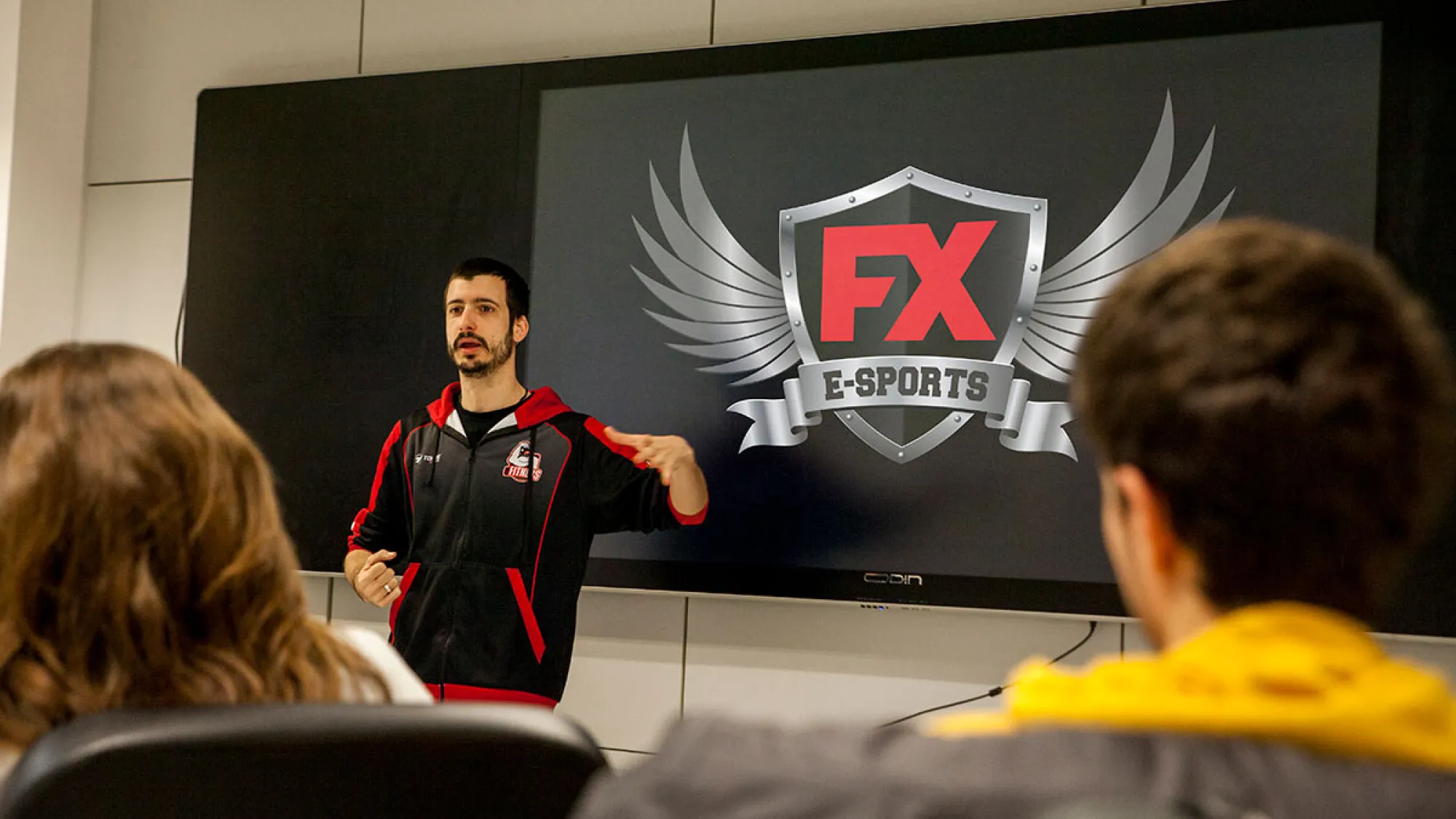
We met with Miquel Llamas to talk about his experience as ONI's coach, the eSports team that has been part of FX Animation's academic life for over two years. Throughout his career in this sector, Miquel has been a professional video game player and has also trained other teams in highly popular gaming leagues.
Good afternoon, Miquel! How are you? You have been ONI's coach since the beginning, tell us a bit about it. How did the idea of adopting eSports as a complementary tool within the academic environment come about?
Hello! Very well. Yes, I was already an eSports coach before joining FX, and I was lucky to be able to dedicate myself to this beforehand. When I retired as a player, I started working as a coach and later on, FX Animation discovered me and proposed including eSports as part of the school's program.
It's fantastic because most of our students study from Monday to Thursday, and they have Fridays "free". In the end, this is a high-performance school with a significant workload, but we dedicate eSports to Fridays, which is the day they don't have class commitments. On one hand, it's great for them to unwind, and at the same time, being within a school schedule, they don't see it as something outside the school dynamic.
What were your expectations about this? Did you believe it was going to work out this well?
Well, I think at the beginning we did know that the potential was there, but we wanted to see what the response would be because it's a world that's very diversified. We didn't know if everyone would receive it well, but the response was overwhelming. When we launched FX eSports, we started with quite a few, around a dozen. Now we are more than 50.
And academically, have you noticed any impact within the classrooms? Has it influenced any aspect?
It's interesting because, every time these things are brought up, almost unintentionally, there's a certain skepticism: "Won't this negatively affect academic performance? Because they are just video games and they will be entertained." But what we do, precisely, is train skills for education. We teach boys and girls to be more organized, to set goals, to manage frustration, to communicate their needs... In the end, the effect has been that those who actively participate in the eSports program not only do not decrease their academic performance, they actually improve it. Because everything they learn in eSports in terms of skills, they apply in the classrooms.
In our collective imagination, we have a clear idea of a coach in sports like soccer or basketball. I think something that many people wonder about is: is it very different in the world of video games?
Well, less than people think. I come from the sports world. Before being a video game coach, I worked as a physical trainer in a gym, and I've seen that it's very similar, very natural. Additionally, eSports players are very competitive and have a strong desire for improvement.
Similar to any other sports discipline, eSports players need to follow a series of training routines, combined with physical and mental preparation. How do you manage all of this?
Completely. In fact, if you make the analogy, just as a soccer player doesn't train solely by playing matches, in eSports neither do they. In eSports, the vast majority of boys and girls have always played on their own, and some reach a very high level without receiving guidance from a coach. My job is to analyze them all, evaluate each one's strengths and weaknesses, and give them the tools to enhance their strengths and minimize their weaknesses. All this combined with more targeted, physical aspects. If your posture when playing is hunched over and your head down, that's not only bad for your back, but you will play worse because you lose peripheral vision and see enemies later than you should. That's what we try to focus on.
Indeed, and being a physical trainer, you must complement it quite well.
Yes, and it's enjoyable. There's nothing more rewarding than seeing a student's progress, whether in Crossfit or League of Legends.
One of the handicaps, if we can call it that, of college and school teams is that part of their roster is replaced year after year, once the players from the last year graduate. How do these changes affect the group dynamics?
Well, compare it to a university team in the American model. When the last-year students graduate, they leave and new ones enter. It's simply part of the nature of this world.
The fact that there is so much fluidity allows you to see and face completely different problems. This also forces you to adapt year after year. So, it's also a challenge for me as a coach, and it allows us to refine the program more and more.
And would you say there are more film or video game students enrolled in the team?
It's actually the opposite of what one might expect. In my life, I have never seen a more heterogeneous group than FX's eSports team!
Among the dozens of students we have, there are those studying film, concept art, illustrators, animators, visual effects artists, aiming to be film directors... And some studying video games. It has stopped being a niche and has become an extremely communal thing. Additionally, we have people who have been playing for many years, and others who are starting from scratch. Personally, that excites me a lot.

Going into more detail about the competition. At a national level, in which leagues have you participated so far? What have been your biggest achievements?
We have been in the University Amazon League, which is the state-level university league where all Spanish universities compete. And currently, we are in the LEA.
We are very pleased. I think it was the first year we participated in the league when we finished third in the national playoffs. We started off strong and achieved many victories and significant progress.
Most of the time, the first time they compete in a league, they hit a wall. And it's normal, as it's their first experience in such a competitive environment. This generates a lot of frustration for them. Therefore, all the work done throughout the course is for them to use those defeats as learning experiences, and in the end, you see an opponent who used to beat you, now losing to you.
In fact, we usually end up near the top of the table, even though that's not the program's main goal. What we want is to see clear progression.
Of course, in the end, it's a tool for self-improvement. And now focusing on the present, where are you currently standing and what is your next goal?
That's a good question. We are currently in the last quarter of the year. We are at the end of the spring split, and we still have one more split to start. We have identified what went wrong, corrected it, and now we are going to apply everything to achieve a good result.
Surely! And finally, to wrap up, which dates should we mark on our calendar and where can we follow you?
Well, we have a date in mid-June, and another at the end of December, just before Christmas. Because at the school, apart from competing at a national level, we hold two internal tournaments annually, and all students can participate, even if they are not in the eSports program. They compete against each other, and the winner becomes the summer or winter champion of FX for that year.
We stream all this on Twitch, both the competition and the awards ceremony. It's really exciting! A lot of people participate, and it's growing every year. So, everyone is invited!
We will be watching! Thank you very much for your time, Miquel. We wish you many victories and progress, and for ONI to continue growing!