


La Furia Del Cine Español

The Fury of Spanish Cinema


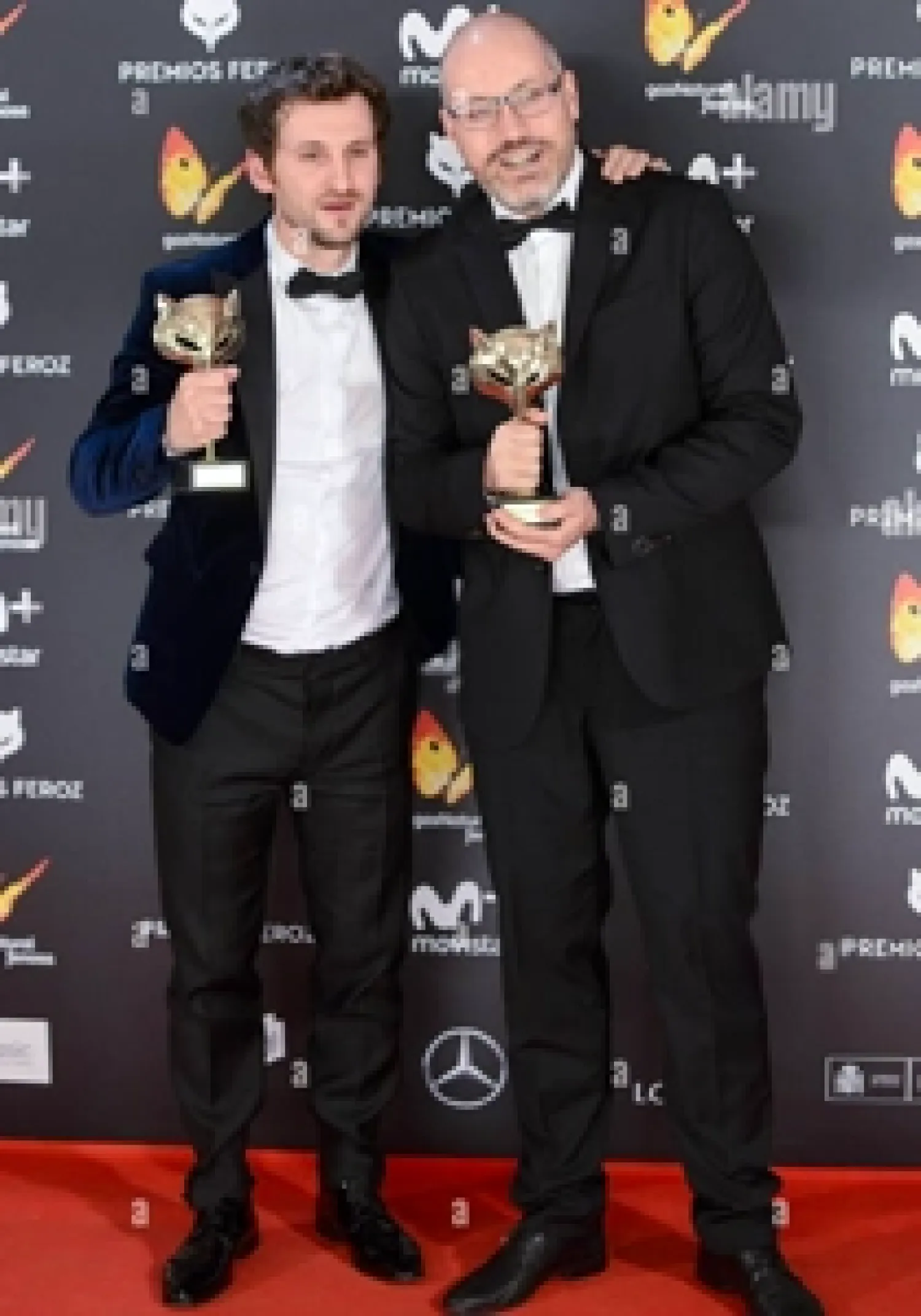
Raul Arevalo – David Pulido

The English translation of "Tarde para la ira" (2016), the film that has recently triumphed at the Goya Awards, is rather curious: "The Fury of a Patient Man". And that could sum up one of the qualities of its acclaimed director, the first-time filmmaker Raúl Arévalo. "Patient" because the actor has had to wait more than eight years to be able to make his directorial debut, and, without a doubt, something close to "fury" could describe his way of narrating and telling us the harsh and striking story of his debut: a work full of energy, authenticity and pure white-knuckle cinema that you can breathe in every frame, in every unstable shot, in every glance and line of dialogue from the actors and in every twist of its carefully calculated script.

Making a film in this country is a matter of patience, just as writing a script is, and from this starting point, an excellent script, this surprising debut is born. This is a factor that does not guarantee a great film, but we can all agree that a bad script will rarely bring us a good one. Arévalo and David Pulido, the screenwriters who took home the Goya in this category for their work, have spent years and years perfecting a story that throws an unpredictable twist at us every third of the film: a robbery, a character who apparently wants nothing more than to love, a calculated revenge, a tour de force full of violence in the purest Peckinpah style, and a couple of final twists. Arévalo and Pulido place us in a purely "cañí" suburban setting, with characters who breathe reality, authenticity and passion, and who put family above all else. This concept of a family broken and shattered by a violent misfortune, which haunts the character played by Antonio de la Torre, will be the seed that unleashes "the fury" shown in the title of this thriller.

Raúl Arévalo directs with nerve, force and vigor, staging scenes that pulse with life in every moment and keep you on constant alert. In every cut and every sudden camera movement we feel that danger is lurking and violence is about to erupt. But when it is time to slow down and move in close to the actors' faces, to listen to them up close and almost smell them, he also has the wisdom to do so. We do not know whether this will be his director's style in his next film, but we do know that it is the style "Tarde para la ira" needs. The other major strength is, without a doubt, the great acting work, a performance that stands out for the purity and sincerity of all involved, a leap into the void that springs from the sometimes exaggerated body language and the verbal torrent of the characters played by actors Raúl Giménez or Manolo Solo; or from the restraint typical of Antonio de la Torre's recent work. A contrast in performance that at times brings him close to a "polar" character, an executioner similar to Bardem in "No Country for Old Men" (Joel and Ethan Coen, 2008). The film, which moves within certain western coordinates both in narrative elements and in some of its landscapes, draws on the tradition of the dark chronicle of rural Spain that we have seen in titles such as "La semana del asesino" (Eloy de la Iglesia, 1972), the TVE series "La huella del crimen" (produced by Pedro Costa, 1985), and especially the Carlos Saura of titles like "Dispara" (1993) or "El séptimo día" (1995).
 
Image
Raul-Arevalo-y-David-Pulido

The English translation of "Tarde para la ira" (2016), the film that has recently triumphed at the Goya Awards, is rather curious: "The Fury of a Patient Man". And that could sum up one of the qualities of its acclaimed director, the first-time filmmaker Raúl Arévalo. "Patient" because the actor has had to wait more than eight years to be able to make his directorial debut, and, without a doubt, something close to "fury" could describe his way of narrating and telling us the harsh and striking story of his debut: a work full of energy, authenticity and pure white-knuckle cinema that you can breathe in every frame, in every unstable shot, in every glance and line of dialogue from the actors and in every twist of its carefully calculated script.

Making a film in this country is a matter of patience, just as writing a script is, and from this starting point, an excellent script, this surprising debut is born. This is a factor that does not guarantee a great film, but we can all agree that a bad script will rarely bring us a good one. Arévalo and David Pulido, the screenwriters who took home the Goya in this category for their work, have spent years and years perfecting a story that throws an unpredictable twist at us every third of the film: a robbery, a character who apparently wants nothing more than to love, a calculated revenge, a tour de force full of violence in the purest Peckinpah style, and a couple of final twists. Arévalo and Pulido place us in a purely "cañí" suburban setting, with characters who breathe reality, authenticity and passion, and who put family above all else. This concept of a family broken and shattered by a violent misfortune, which haunts the character played by Antonio de la Torre, will be the seed that unleashes "the fury" shown in the title of this thriller.

Raúl Arévalo directs with nerve, force and vigor, staging scenes that pulse with life in every moment and keep you on constant alert. In every cut and every sudden camera movement we feel that danger is lurking and violence is about to erupt. But when it is time to slow down and move in close to the actors' faces, to listen to them up close and almost smell them, he also has the wisdom to do so. We do not know whether this will be his director's style in his next film, but we do know that it is the style "Tarde para la ira" needs. The other major strength is, without a doubt, the great acting work, a performance that stands out for the purity and sincerity of all involved, a leap into the void that springs from the sometimes exaggerated body language and the verbal torrent of the characters played by actors Raúl Giménez or Manolo Solo; or from the restraint typical of Antonio de la Torre's recent work. A contrast in performance that at times brings him close to a "polar" character, an executioner similar to Bardem in "No Country for Old Men" (Joel and Ethan Coen, 2008). The film, which moves within certain western coordinates both in narrative elements and in some of its landscapes, draws on the tradition of the dark chronicle of rural Spain that we have seen in titles such as "La semana del asesino" (Eloy de la Iglesia, 1972), the TVE series "La huella del crimen" (produced by Pedro Costa, 1985), and especially the Carlos Saura of titles like "Dispara" (1993) or "El séptimo día" (1995).