


De Palma por De Palma

De Palma por De Palma

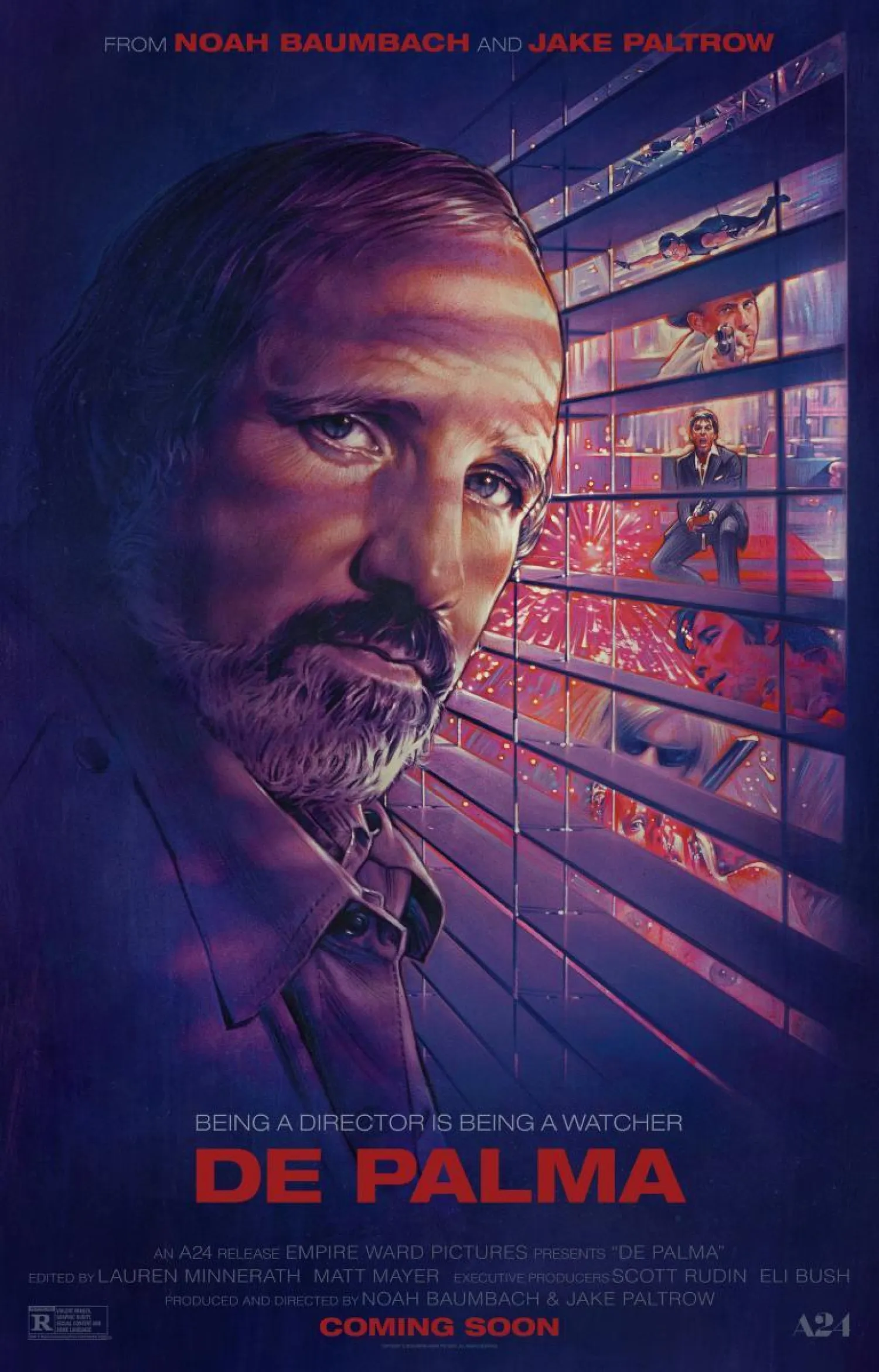
We recently discussed the documentary about Hitchcock/Truffaut and the influence that "the master of suspense" has had on many of the great filmmakers who are still active today. Curiously, in the documentary, without a doubt, his most accomplished student, Brian de Palma, does not appear. The documentary "De Palma" (2015), directed by filmmakers Noah Baumbah and Jake Paltrow, explores the life and career of the screenwriter and film director from New Jersey. This article could have easily been titled "De Palma by Baumbah and Paltrow," but it is the director's own voice behind great titles like "Scarface" (1983) or "The Untouchables" (1987) that energetically and reflectively narrates his work and life at the same time.

The documentary begins with De Palma explaining the impact that watching "Vertigo" (1958) had on his adolescence. In the words of the filmmaker himself: "Hitchock makes a film ("Vertigo") about the role of a director, which is basically to create romantic illusions; he makes you fall in love with it (with his romantic creation represented in the figure of Kim Novak) and then kills it, twice. And that is what we directors do: we create beautiful women, exciting virile men, we make audiences engage in their stories and emotionally attach to them. Hitchcock shows what we do while we do it. And it is something that has fascinated me since the first time I saw it at 18 years old."

De Palma matured with "Vertigo," and much of his career has followed the trail of the British director by making personal versions disguised as confessed remakes, direct homages, explicit nods, and playing with the plots, starting points, or essence of many of Hitchcock's films and characters. From "Obsession" (1976), his particular homage to "Vertigo," through "Dressed to Kill" (1980), a direct tribute to "Psycho" (1960); to "Body Double" (1984), a mix of many of his films but directly inspired by "Rear Window" (1954). All of them are heirs to the basic principles of Hitchcock's cinema: creating a film based on expressive images.

This aspect is something that has marked all of De Palma's work: being a strictly visual director and creating emotions in the viewer through images. The director recounts the stylistic resources he has used in his films to convey emotions, such as split screens in titles like "Sisters" (1972) or "Carrie" (1976), to create suspense by playing with two simultaneous points of view. Another characteristic resource is the long and elaborate tracking shots that we can see in "Snake Eyes" (1998) or "Blow Out" (1981) to track characters and thus create moments of tension and suspense that last longer, always accompanied by hypnotic and suggestive melodies from composers such as Bernard Herrmann, Pino Donaggio, or Ennio Morricone. These visual excesses have sometimes been criticized by the press and specialized critics as negative, as overblown and delirious, but undoubtedly define him as a unique author.

The documentary takes us through his work from beginnings marked by auteur, underground, and politically challenging cinema, in which he worked with a young Robert De Niro in titles like "Greetings" (1968) and "Hi, Mom!" (1970), to his complicated relationships with major studios when making commercial films like "Mission to Mars" (2000). It also reviews his horror and suspense films like "The Fury" (1978) or "Raising Cain" (1992); box office hits like "Mission: Impossible" (1996); tremendous failures like "The Bonfire of the Vanities" (1990), and it also refers to personal ventures like "Casualties of War" (1989).

With sincerity, self-criticism, humor, and revealing important moments of his personal life, De Palma, the accomplished student, now becomes a valuable teacher for the filmmakers of the film, friends, and followers of the filmmaker, and of course, for any cinema enthusiast and student.

A while ago we were talking about the documentary on Hitchcock/Truffaut and the influence that "the master of suspense" has had on many of the great filmmakers who are still active today. Interestingly, the documentary does not include his most successful student: Brian de Palma. The documentary "De Palma" (2015), directed by filmmakers Noah Baumbah and Jake Paltrow, explores the life and career of the screenwriter and filmmaker from New Jersey. This article could easily have been titled "De Palma by Baumbah and Paltrow," but it is the director's own voice that narrates his work and life in an energetic and reflective manner, the director of great titles such as "Scarface" (1983) or "The Untouchables" (1987).

The documentary begins with De Palma explaining the impact that watching "Vertigo" (1958) had on him during his adolescence. In the filmmaker's own words: "Hitchcock makes a film ("Vertigo") about the task of a director, which is basically to create romantic illusions; he makes you fall in love with it (with his romantic creation represented by Kim Novak) and then he kills it, twice. And that is what we directors do: we create beautiful women, exciting virile men, we make audiences get involved in their stories and emotionally attached to them. Hitchcock shows what we do while we do it. And it is something that has fascinated me since the first time I saw it at 18 years old.”

De Palma matured with "Vertigo" and a good part of his career has pursued the trail of the British director by making personal versions disguised as confessed remakes, direct tributes, explicit winks, and playing with the plots, starting points, or essence of many of Hitchcock's films and characters. From "Obsession" (1976), his particular tribute to "Vertigo", through "Dressed to Kill" (1980), a direct tribute to "Psycho" (1960); to "Body Double" (1984), a cocktail of many of his films but directly inspired by "Rear Window" (1954). All of them are heirs to the basic principles of Hitchcock's cinema: creating a film based on expressive images.

This aspect is something that has marked De Palma's entire work: being a strictly visual director and creating emotions in the viewer through images. The director tells us about the stylistic resources he has used in his films to convey emotions, such as split screens in titles like "Sisters" (1972) or "Carrie" (1976), to create suspense by playing with two simultaneous points of view. Another characteristic resource is the long and elaborate sequence shots that we can see in "Snake Eyes" (1998) or "Blow Out" (1981) to track characters and create moments of tension and suspense that last longer, always accompanied by hypnotic and suggestive melodies from composers like Bernard Hermann, Pino Donaggio, or Ennio Morricone. These visual excesses have sometimes been negatively criticized by the press and specialized critics as pompous and delirious, but they undoubtedly define him as a unique author.

The documentary takes us through his work from beginnings marked by auteur cinema, underground and politically oppositional, in which he worked with a young Robert De Niro in titles like "Greetings" (1968) and "Hi, Mom!" (1970), through his complicated relationships with major studios when making commercial films like "Mission to Mars" (2000). It also reviews his horror and suspense films such as "The Fury" (1978) or "Raising Cain" (1992); box office hits like "Mission: Impossible" (1996); tremendous failures like "The Bonfire of the Vanities" (1990), and also refers to personal projects like "Casualties of War" (1989).

With sincerity, self-criticism, humor, and revealing important moments of his personal life, De Palma, the successful student, becomes a valuable teacher for the filmmakers of the film, friends, and followers of the filmmaker, and of course, for any movie enthusiast and student.